Feeling the sea breeze and the freedom of sailing on open waters is an experience every boating enthusiast wants to live. But it’s not enough to simply head out to sea and sail wherever you like. There are clearly defined navigation zones that must be respected to comply with regulations. And if you don’t respect them, did you know you could be putting your safety and the safety of others at risk?
In this sense, being well informed before setting sail is essential to enjoy safe navigation. Knowing the navigation zones and planning each voyage will allow you to explore the sea with peace of mind and focus on what really matters: living unforgettable moments. So you can achieve that with complete confidence, at Motyvel, specialists in the sale and rental of yachts, we explain everything you need to know about navigation zones. All aboard!
What are navigation zones?
Just as roads are divided by signs and speed limits to ensure drivers’ safety, the sea is divided into navigation zones established by maritime authorities to define where and how vessels can operate depending on their category, equipment and technical conditions. They are mainly classified according to distance from the coast and the expected weather conditions, with the aim of ensuring navigators’ safety and preventing risks.
Difference between inland and offshore zones
On the one hand, inland zones include protected coastal waters such as ports, bays or estuaries. Conditions here are usually calmer, making them ideal for beginners or small vessels.
Offshore zones, on the other hand, refer to open waters, which are more exposed to winds, waves and currents. These areas require better-equipped vessels and more experienced crews.
How many navigation zones are there?
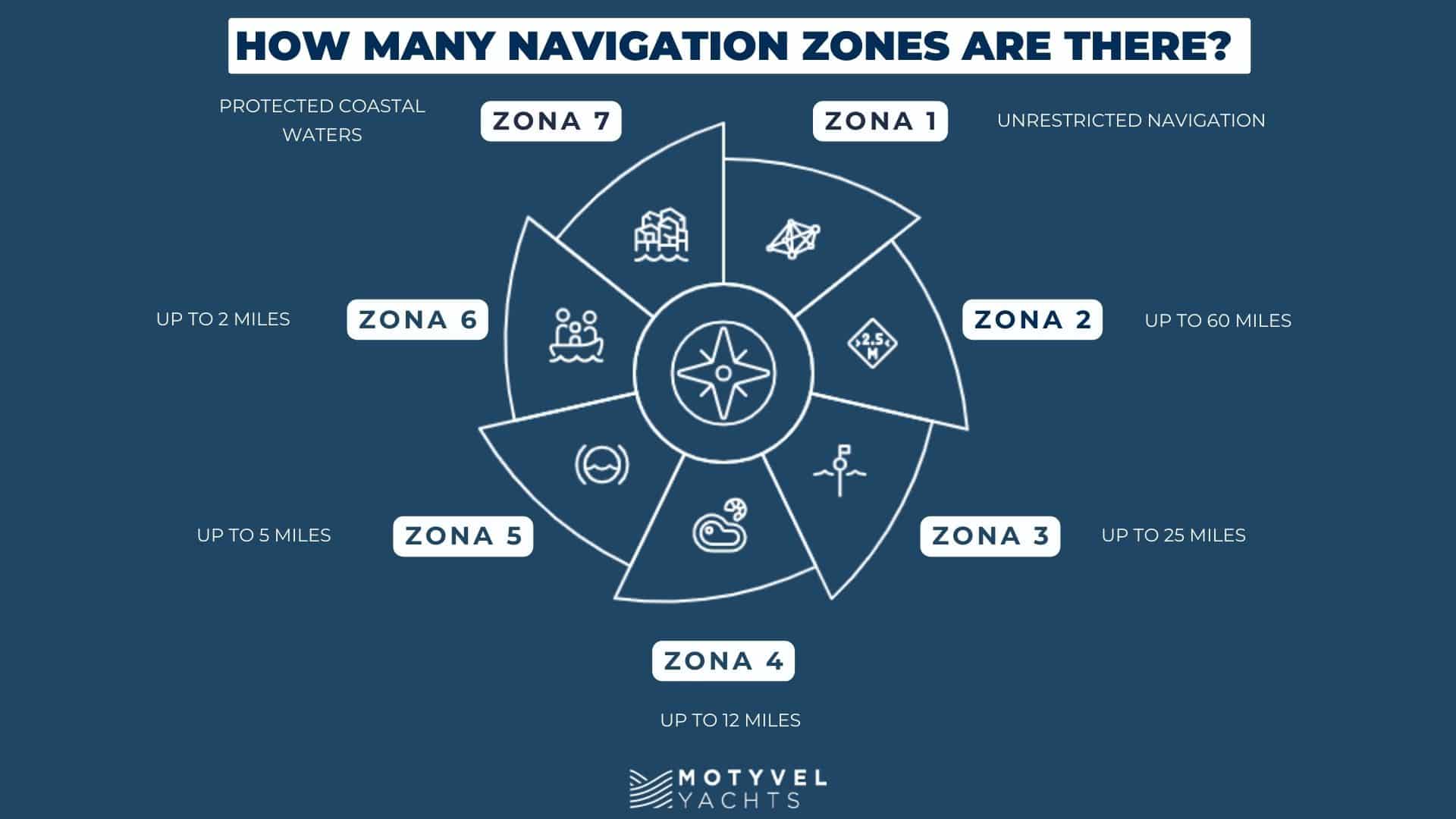
In total, there are 7 navigation zones. Below, we break down each one to understand their particularities:
Zone 1: unrestricted navigation
This category allows you to navigate without restrictions in terms of distance or geographical location. It is reserved for vessels with full equipment for transoceanic crossings.
Zone 2: up to 60 miles from the coast
Aimed at recreational vessels that meet the requirements needed to ensure safety in waters further from the coast.
Zone 3: up to 25 miles from the coast
An ideal option for medium-distance trips, with a reasonable margin to return quickly in case of emergency.
Zone 4: up to 12 miles from the coast
This is one of the most common zones for recreational boats. For example, the popular Polar Regatta, which departs from Barcelona, is organised in this zone so that all kinds of recreational vessels can take part.
Zone 5: up to 5 miles from an accessible beach or sheltered area
Designed for navigation in calm waters and for activities such as recreational fishing or comfortable excursions close to the coast.
Zone 6: up to 2 miles from an accessible beach or sheltered area
Similar to zone 5, but more limited in terms of distance. It is ideal for small vessels and family activities.
Zone 7: protected coastal waters
Limited to ports, bays and very sheltered waters.
What is navigation zone 5?
Although we have already briefly mentioned navigation zone 5, it is important to go deeper into its characteristics to better understand why it is one of the most popular for recreational activities. It is mainly characterised by its proximity to accessible beaches or sheltered areas, which makes it a highly popular option for recreational activities such as family outings, water sports or fishing. In this zone, weather conditions tend to be more predictable, and it is possible to find shelter quickly if conditions change.
What does zone 7 mean?
As for zone 7, it is worth noting that it represents the basic level of navigation, perfect for beginners and small vessels. Because it is limited to protected waters such as ports or bays, it offers the greatest possible safety. It is also commonly chosen for the training of new navigators.
The importance of respecting navigation zones
Respecting navigation zones ensures your safety, but it also helps you avoid legal penalties and contributes to responsible navigation. Let’s look at some of the risks of not following these regulations:
Hazardous conditions
Weather conditions at sea can be treacherous. That is why entering unauthorised zones can expose you to winds and currents that exceed your vessel’s handling capabilities. For example, you may face unexpected swell and sudden weather changes that put both the crew and equipment at risk.
Legal penalties
In Spain, fines for breaching maritime regulations can range from hundreds to thousands of euros, depending on the seriousness of the infringement. In addition, navigators may face suspension of licences or permits to operate vessels.
Damage to the vessel
Sailing in unsuitable areas significantly increases the risk of mechanical or structural breakdowns, such as hull damage caused by submerged objects or impacts due to a lack of knowledge of the maritime terrain.
Tips for choosing the right zone for sailing
Before setting off, take the time you need to plan your route and choose the right navigation zone. To do so, we recommend:
How much experience do you have?
If you are a beginner, choose protected zones such as 7 or 6. They tend to have more stable weather conditions and offer the security of being close to land in case of emergency. This way, you can build confidence and become familiar with handling your vessel.
Know your vessel
Check that it meets the requirements for the zone you want to explore. In other words, you must ensure that the navigation systems, radio and safety equipment are in perfect working order. It is also important to have on board the mandatory items required by the zone’s regulations, such as lifejackets, flares and fire extinguishers.
Keep tools and resources to hand
Use apps such as Navionics, Windy or Google Maps to plan your route in advance. These tools provide you with up-to-date information on wind conditions, currents and nearby points of interest, making navigation safer.
Training and certifications
If you plan to sail in more demanding zones, consider obtaining certifications such as the PER (recreational craft skipper) or the PY (yacht skipper). These will allow you to access more zones and better prepare you to handle emergencies and understand maritime regulations more accurately.
Rely on the experience of experts
Not sure which navigation zone suits your adventure? At Motyvel we can advise you on choosing the perfect yacht and your desired navigation zone. Our team has experience with different types of vessels and can help you select the ideal model for your goals and level of experience.
Sailing has never been easier with Motyvel
Are you passionate about sailing? Exploring the sea, feeling the salty breeze and discovering new horizons is an incomparable experience—and doing it safely is one of the keys. At Motyvel, we are here to help you make your sailing dreams come true.
We offer a wide selection of yachts for rental and sale, designed to suit any level of experience and the type of adventure you want to undertake. Our team of experts will advise you so you can find the perfect vessel that matches you and the regulations of the navigation zones.
If you would like more information, please contact us. Sail safely and enjoy the freedom the sea has to offer with the support of Motyvel.