Imagine sailing through waters where you can spot vast seagrass meadows, coral reefs and countless marine species. Shallow waters are recognised worldwide for offering a combination of natural beauty, exceptional biodiversity and outstanding opportunities for sailing and ecotourism.
However, did you know that sailing through them requires certain precautions? So you can enjoy this wonderful habitat without causing damage, Motyvel has prepared this guide with all the information you need. Ready for the adventure?
What are shallow waters?
The term shallow waters refers to marine or lacustrine areas where depth is low, generally less than 6 metres. These zones are usually found near coasts, bays, estuaries and lagoons, and are known for their crystal-clear waters and biodiversity.
For sailing, shallow waters offer unique opportunities: access to secluded beaches, the chance to anchor in paradisiacal spots and a closer connection with the natural environment. However, they also pose a challenge, as sandbanks and reefs can damage vessels if the necessary precautions are not taken.
Ecological importance of shallow waters
Shallow waters play a crucial role in maintaining the balance of marine ecosystems. These habitats are essential both for biodiversity and for sustaining environmental stability on a global scale. Let’s look at their importance in detail:
Unique biodiversity
Shallow waters are home to an astonishing variety of species that depend on these habitats to survive:
Coral reefs
In addition to protecting coastlines from storms and erosion, they are home to more than 25% of all known marine species. Their conservation is essential, as their destruction would drastically affect the food chain.
Seagrass meadows
These areas, made up of underwater plants, are crucial for species such as seahorses, turtles and dugongs. In addition, they can absorb CO2 up to 35 times faster than terrestrial forests.
Mangroves
They serve as nursery areas for commercially important fish and shellfish, making them vital to the economy of many coastal communities as well.
Role in environmental balance
Shallow waters are a natural shield that protects both marine life and humans:
Coastal protection
Their ability to dissipate wave energy prevents erosion and also reduces the impacts of flooding in inhabited areas.
Carbon cycle
These areas contribute significantly to blue carbon capture, a vital process in the fight against climate change. It is estimated that 50% of the carbon stored in marine ecosystems comes from these zones.
Threats
Despite their importance, shallow waters are under increasing pressure due to human activities:
Pollution
From plastics to chemical waste, shallow waters are critical points where debris accumulates and disrupts ecosystems.
Climate change
Global warming increases water temperatures, leading to coral bleaching and affecting the health of seagrass meadows.
Human activity
The construction of coastal infrastructure, uncontrolled tourism and irresponsible boating practices are constant threats that require urgent measures to mitigate them.
Protecting shallow waters is a shared responsibility that ensures both the survival of ecosystems and the quality of life of the communities that depend on them.
Sailing in shallow waters
Sailing in shallow waters can be an unforgettable experience, as long as it is done with caution and responsibility. These areas offer an exceptional opportunity for those looking to combine nature exploration with a richer boating experience.
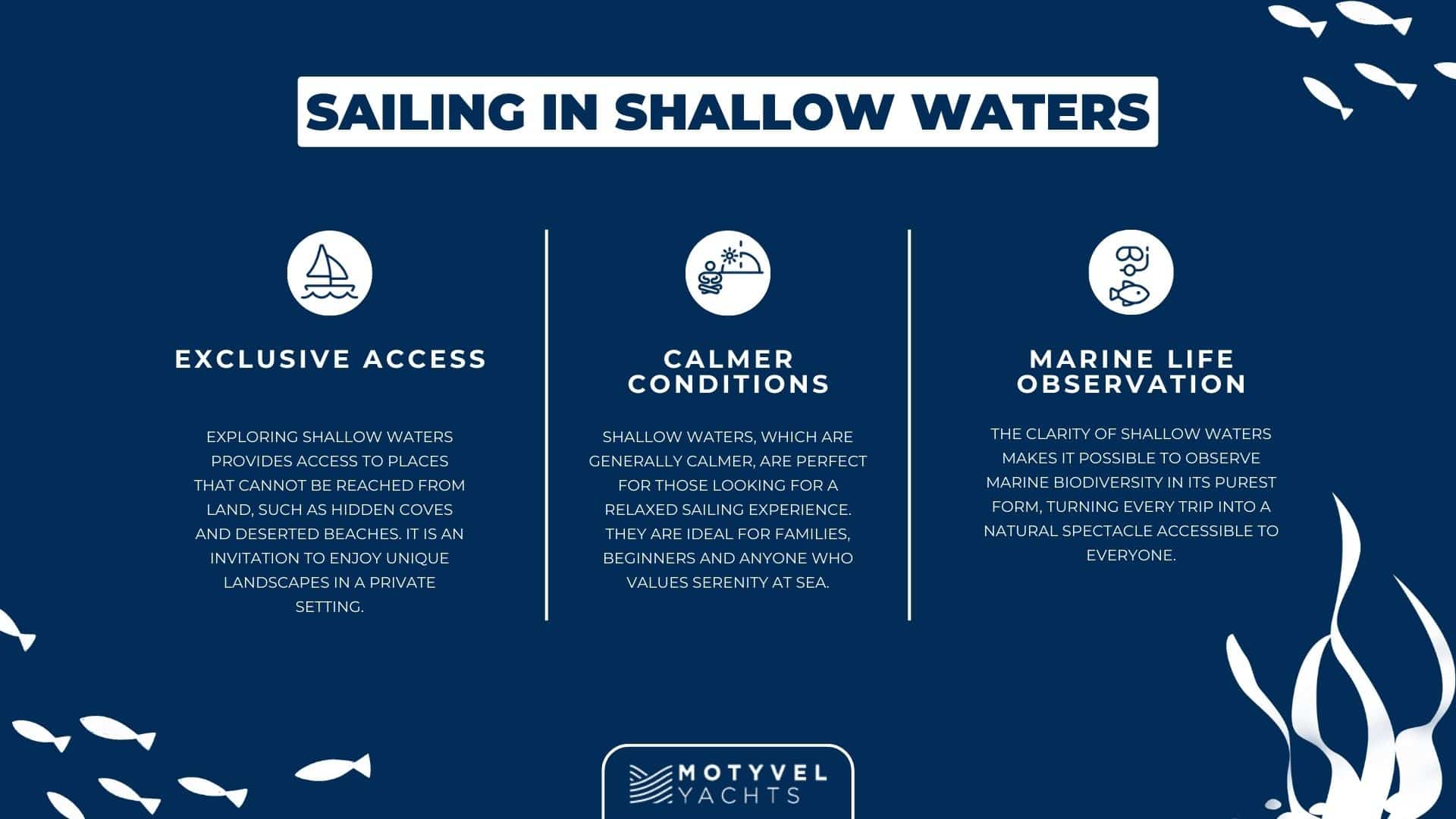
Exclusive access
They allow you to discover hidden coves, secluded beaches and coastal landscapes that cannot be appreciated from land. These zones are ideal for enjoying intimate moments in contact with nature.
Calmer conditions
Thanks to the lower depth and protection from strong currents, shallow waters tend to be calmer, making them a perfect environment for beginners, families with children or those who simply want to relax.
Marine life observation
Because of their clarity, it is possible to observe fish, corals and other species in their natural habitat without the need to dive, an experience that adds value to any trip.
Challenges for sailing
Although sailing in these waters has many benefits, it is also important to pay attention to certain precautions to enjoy an adventure without setbacks:
Risk of grounding
Shallows require accurate nautical charts, experience and constant attention to the vessel’s draught to avoid accidents or damage to the boat.
Damage to the environment
Propellers and anchors can cause havoc in fragile ecosystems such as seagrass beds or coral reefs. This impact can be irreversible if boating is not carried out responsibly.
Changing conditions
In certain areas, tides and winds can transform water conditions quickly, which requires foresight and adaptability.
Recommendations for sailing in shallow waters
At Motyvel, we have gathered the following tips for sailing in these waters:
Use up-to-date nautical charts
They will help you identify safe areas and avoid unnecessary risks. Using GPS can also be a great ally on these trips.
Respect protected areas
Many shallow waters are nature reserves or protected spaces. Find out about local regulations and comply with the rules to limit environmental impact.
Adopt sustainable practices
Anchor in designated areas with eco-mooring buoys, reduce speed in sensitive areas and make sure you collect any waste generated during your trip.
Learn about the environment
Learning about local flora and fauna will not only enrich your experience, it will also help you make responsible decisions during your visit.
Examples of shallow waters around the world
In different parts of Spain and around the world, we can find shallow waters:
Great Barrier Reef, Australia
Considered one of the seven natural wonders of the world, the Great Barrier Reef is the largest coral structure on the planet, visible even from space. This ecosystem is home to more than 1,500 species of fish, 400 types of coral and various species of sharks and sea turtles, making it an unbeatable destination for diving and snorkelling.
Cayes of Belize
This group of islands and reefs is known for its crystal-clear waters and rich marine biodiversity. Highlights include the Hol Chan Marine Reserve, ideal for spotting turtles and rays, and the Great Blue Hole, an underwater sinkhole that draws divers from all over the world thanks to its mystery and beauty.
In Spain, we also have exceptional shallow-water areas that combine natural beauty, biodiversity and recreational opportunities:
Doñana National Park (Andalusia)
With its marshes, dunes and beaches, Doñana is one of the most important national parks in Europe. It is home to emblematic species such as the Iberian lynx and the Spanish imperial eagle. The park’s shallow waters are perfect for kayaking and offer unique views of its rich biodiversity.
Balearic Islands
Known for their turquoise-water coves, such as Cala Macarella in Menorca or Cala Salada in Ibiza, the Balearics are the perfect destination for sailing enthusiasts. These islands offer countless activities, from snorkelling and paddleboarding to simply enjoying the scenery while anchored in their calm waters.
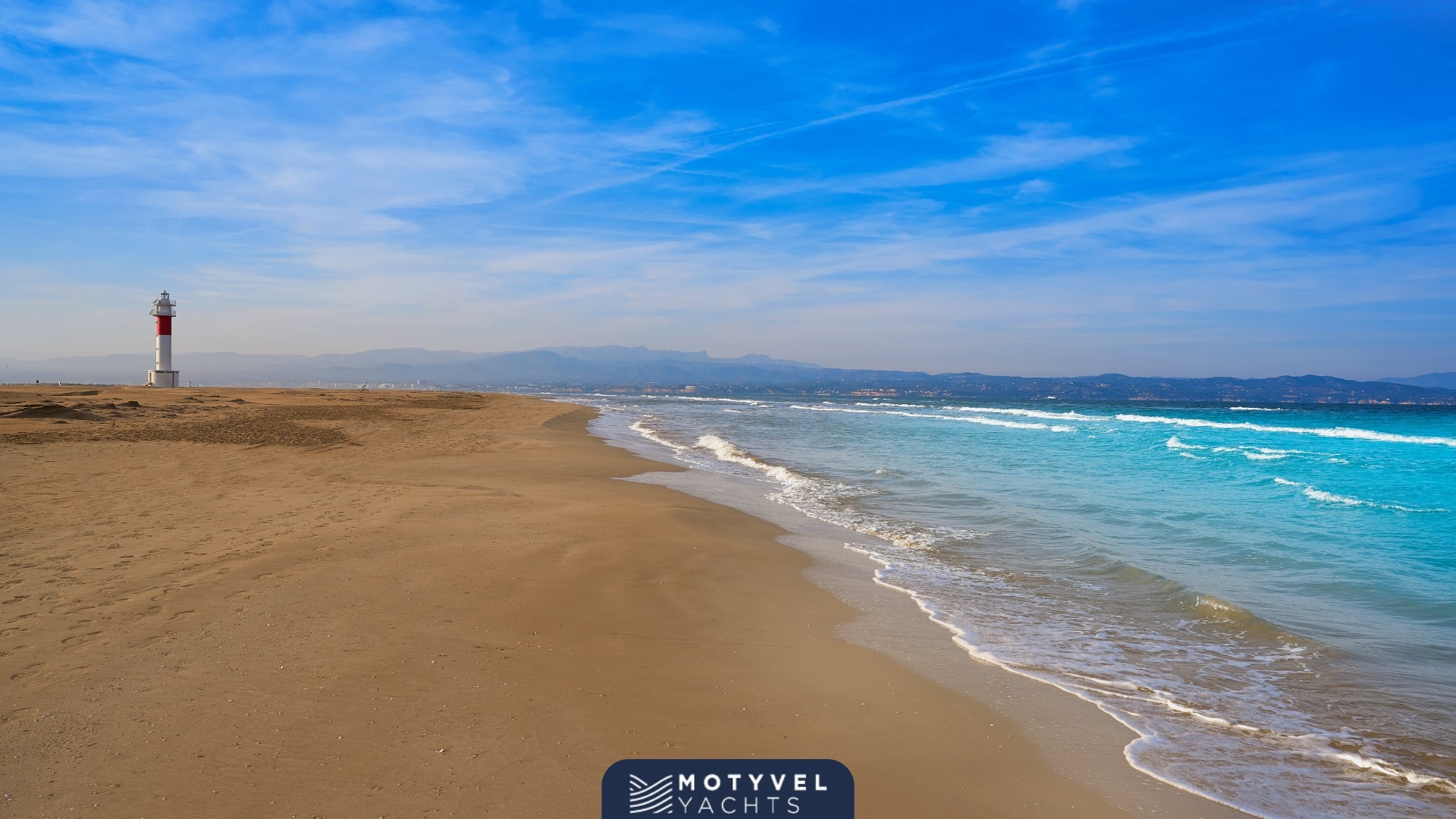
Ebro Delta (Catalonia)
This vast river delta is a sanctuary for more than 300 bird species, such as flamingos and herons. As well as being an ideal spot for birdwatchers, the Ebro Delta offers activities such as kayaking, paddleboarding and boat trips that allow you to explore its channels and lagoons.
Explore the wonders of shallow waters with Motyvel
Shallow waters offer great possibilities for boating and nature enthusiasts. At Motyvel, we help you explore these areas safely so you can make the most of your boating experience.
Have you already explored all our options for boat and yacht hire and sales? Get in touch with us and get ready to enjoy unforgettable adventures in shallow waters.